

 Match ball
Hikari (光)
$65$75
Hikari is part of our premium soccer ball range, inspired by Japanese craftsmanship and designed for elite…
By TX Football · 6 January 2026 · 5 min read
So the system relies on timing, not on one target man. What a false nine actually does, in possession A false nine must do more than “drop deep.” The role needs smart decisions. In possession, a top false nine will:
If you follow football closely, you have likely heard the term False Nine during match analysis or tactical debates. It sounds clever. It sounds modern. Yet for many fans, it still feels confusing. How can a striker lead the line while spending most of the game away from goal?
The false nine in football answers that question through movement, intelligence, and timing. It challenges traditional ideas of the striker role and forces defenders into uncomfortable decisions. Over the years, this tactic has shaped some of football’s most dominant teams. To understand why it works, we need to look at what it really means, where it came from, and how teams use it today.
The false nine meaning refers to a striker who refuses to stay up front. Instead, they drop deeper into midfield areas.
So, what is a false nine in football at its core? It is a forward who sacrifices position to gain control. The player attracts defenders. Then space opens elsewhere. This movement disrupts defensive shape and marking plans.
At first, the false nine in football can feel backwards. Why would a team move its main scorer away from goal?
The answer is control and disruption. A false nine gives your team an extra player in midfield. That helps you keep the ball. Also, defenders hate uncertainty. When the striker drops deep, centre-backs face a painful choice.
Either way, the defence loses shape. That is the whole point.
The false nine in football did not begin with modern coaches. The idea goes back many decades.
In older eras, teams used strict man-marking. A striker who dropped deep caused confusion. Some teams experimented with this in the early 1900s. They wanted their centre-forward to create, not just finish.
Now let’s talk about the key step. Hungary, especially the famous sides linked to the “Mighty Magyars,” used a deep-lying centre-forward. Later, Nándor Hidegkuti became the clearest example. He dropped into midfield, pulled defenders out, and opened space for runners. That movement helped Hungary destroy traditional systems.
Even if people did not use the label “false nine” then, the behaviour matched it closely.
Football changed. Players became quicker and more technical. Coaches started valuing midfield control even more. So the false nine in football returned at the right time.
Luciano Spalletti faced a problem. Roma lacked a classic striker at times. So he used Francesco Totti in a roaming central role. Totti dropped deep, linked play, and still arrived to score. Roma’s attack became hard to predict.
This period made people talk about the role again in modern terms.
Pep Guardiola did not invent the idea. However, he made it famous worldwide.
At Barcelona, Guardiola used Lionel Messi as a false nine. Messi dropped between the lines. He turned and drove at defenders. If a centre-back stepped out, Messi slipped a pass into the space. If nobody stepped out, Messi carried the ball forward himself.
This is why the false nine position in soccer became a headline tactic. Barcelona’s dominance made it look like the future.
The false nine formation often starts as a 4-3-3. However, the real shape changes during the match. Here is the key, the false nine drops, and the wingers attack inside. Midfielders also push up to support. So the team creates a moving front line instead of one fixed striker.
You will often see:
So the system relies on timing, not on one target man.
A false nine must do more than “drop deep.” The role needs smart decisions.
In possession, a top false nine will:
So, what is a false nine in football in practical terms? It is a striker and a creator in the same body.
Out of possession, the false nine often presses like a normal striker. They close centre-backs, block easy passes, and trigger pressure.
Also, many teams use counter-pressing. That means the false nine helps win the ball back quickly after losing it. This helps the team stay on the front foot.
Many players have played this role. However, a few names stand out.
These examples show the role can look different. Yet the core idea stays the same.
The false nine in football offers clear benefits when the team suits it.
So you do not just “remove” a striker. You create a different type of attack.
The tactic also has real limits.
The false nine in football grew from old ideas about movement and creation. Then modern coaches revived it through smarter systems. It still works because it forces defenders to make bad choices. So when you spot it in a match, watch the centre-backs closely, the panic tells the story.
Match ball$65$75
Hikari is part of our premium soccer ball range, inspired by Japanese craftsmanship and designed for elite…
 Hybrid ball · Sizes 4, 5
$40$50
Unveiling the Voyager+ : The Hybrid Powerhouse Welcome to a new era of football, where the Voyager takes…
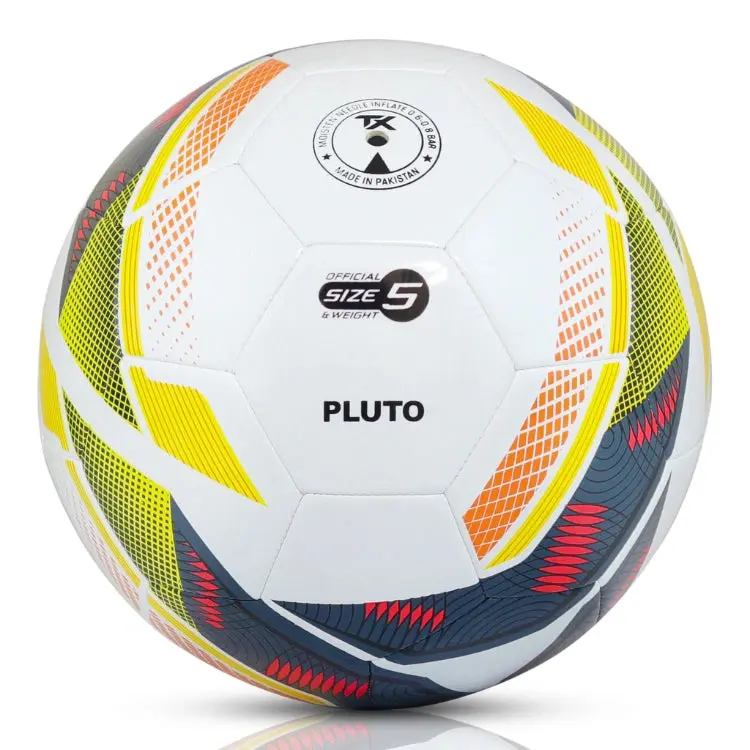 Junior ball · Sizes 3, 4, 5
$20$25
Presenting the Pluto: Tailored Excellence for Junior Football Journey into the future of junior football…
 Match ball
$110$140
CLIMATE Match Football: The Eco-Friendly Powerhouse Crafted from recycled PET bottles, the CLIMATE Football…
New articles, new balls and bundle deals. One email, no spam.