Skip to content
Buying guides

All You Need to Know About the Evolution of Soccer Balls

By TX Football · 22 April 2026 · 4 min read

All You Need to Know About the Evolution of Soccer Balls

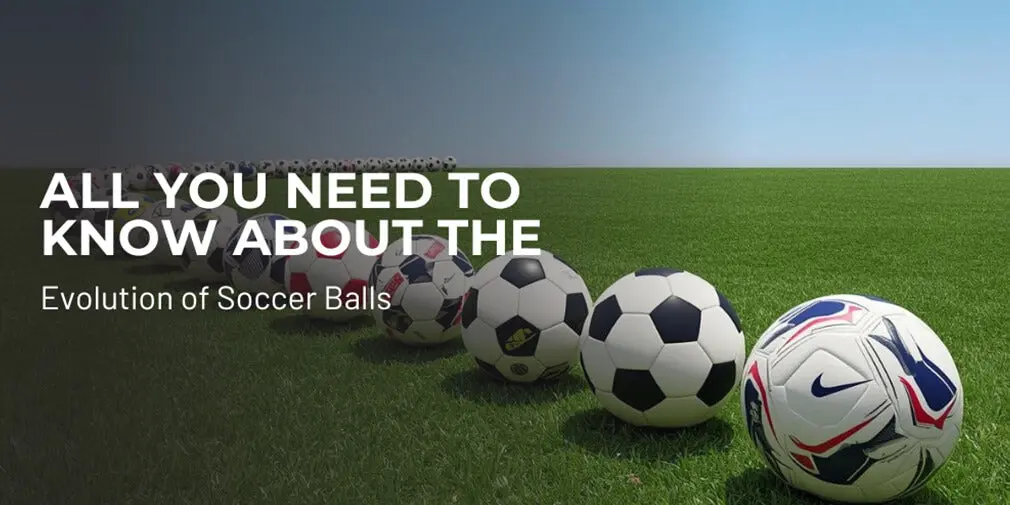
A modern football is a masterpiece of engineering and design. Its shape, aerodynamic predictability, and bounce are a consequence of rigorous research into achieving the ideal ball. Thereby, making it the perfect instrument for players like Lionel Messi and Aitana Bonmatí to showcase their talents. However, the journey to get here was anything but smooth. Instead, the evolution of soccer balls has gone through multiple hurdles to get to its place today as a contemporary marvel.

For centuries, the instrument to play the world’s most popular sport was chaotic, unpredictable, and often a painful projectile. That’s why the evolution of soccer balls is not merely a story of technology. Rather, it is a testament to human ingenuity, standardization, and the relentless pursuit of perfection. Furthermore, this journey traverses from medieval villagers kicking around animal organs to contemporary $150 Adidas Al Rihla used in the 2022 World Cup. The game has come a long way.

The Evolution Of Soccer Balls

A football has undergone a dramatic transformation over the past few centuries. Although the rules of the modern game have taken shape gradually over the years, various iterations have existed for centuries. Whether it is Mesoamerica using animal organs or medieval England playing with sap latex, vague records tell unique stories. However, the true evolution of soccer balls began with the introduction of rubber.

Chapter 1: The Rubber Revolution (1800s)

Football changed off the pitch in 1836 when Charles Goodyear invented vulcanized rubber, revolutionizing sports.

  • The First Modern Ball (1855): Goodyear designed the first vulcanized rubber football, which held air and maintained a round shape, unlike pig bladders. It debuted at the Paris Exhibition in 1855.
    Early rubber balls were covered in stitched leather panels, which absorbed water, making them heavier during wet matches.
  • The Standardization of Shape: In 1872, the English Football Association (FA) standardized ball dimensions: 27–28 inches in circumference and 13–15 ounces in weight. Though materials remained basic, this marked the shift from "anything goes" to specific measurements.

Chapter 2: The Tanned Leather Era (1900s – 1960s)

Footballs evolved into brown leather pumpkins made from 18 tanned cowhide panels stitched over a rubber bladder.

  • The Iconic T-32 Pattern: Despite misconceptions from black-and-white broadcasts, balls remained brown with 32 panels (12 pentagons, 6 hexagons). This design produced a near-perfect sphere and dominated for decades.
  • The Introduction of Valves: Pre-1950s balls had laces that disrupted dribbling and heading. The hidden latex valve allowed smooth inflation, creating a safer and more consistent surface.

Chapter 3: The Black-and-White Revolution (1970)

The iconic black-and-white ball traces back to FIFA’s 1970 World Cup in Mexico.

  • The Telstar (1970): Adidas introduced the Telstar, named after the communications satellite. With 32 hand-stitched leather panels, it was the first World Cup ball widely televised and set a global standard for 30 years.

Chapter 4: The Synthetic Revolution (1986 – 2002)

Material science brought synthetic leather to meet FIFA’s demands for consistent performance in all conditions.

  • The Azteca (1986 – Mexico): First synthetic World Cup ball, waterproof and durable, with a nylon layer to prevent panel stretching, ideal for Mexico’s high altitude and heat.
  • The Fevernova (2002 – Korea/Japan): A controversial ball with gold-and-red design and three-layer woven fabric. Its erratic flight challenged goalkeepers while delighting forwards, highlighting aerodynamics’ importance.

Chapter 5: The Modern Era (2006 – 2022)

Hand-stitched balls gave way to thermally bonded designs, producing seamless surfaces with zero water absorption.

  • The Jabulani (2010 – South Africa): With 8 thermally bonded panels, its smoothness caused unpredictable flight, turning long shots into a lottery.
  • The Brazuca (2014 – Brazil): Introduced 6 twisted, textured panels with tiny bumps, providing drag and stability. Widely praised as one of the best World Cup balls.
  • The Al Rihla (2022 – Qatar): Meaning "The Journey," this 20-panel ball is 20% lighter and 50% faster than its predecessor, designed for the speed and intensity of modern football.

Conclusion

All in all, the evolution of soccer balls has not stopped by any means. With the world becoming environmentally conscious of its behavior, recent iterations are more eco-friendly than ever before. The next World Cup in 2026 in North America will likely introduce a football that is impeccably designed, both in terms of performance and environmental preservation.

FAQ,s
▶ Q: What is the origin of soccer ball materials?
A: The origin of soccer ball materials traces back to ancient China (stuffed leather) and medieval Europe (inflated pig bladders). The modern ball began with Charles Goodyear’s vulcanized rubber in 1855.
▶ Q: Can you provide a timeline of soccer balls?
A: A concise timeline of soccer balls includes 1855 (vulcanized rubber), 1872 (standardized size), 1970 (Telstar – black/white), 1986 (Azteca – synthetic), 2006 (Teamgeist – thermal bonding), 2010 (Jabulani – 8 panels), and 2022 (Al Rihla – lightest ball ever).
▶ Q: What is the most important milestone in the history of FIFA soccer balls?
A: The most significant moment in the history of FIFA soccer balls is the introduction of the Adidas Telstar in 1970. It was the first ball designed for TV visibility and established the iconic black-and-white pattern.
▶ Q: Why did the Jabulani ball fail?
A: The Jabulani failed due to its smooth, seamless surface. It had only 8 panels, which made it too aerodynamic at high speeds, causing unpredictable swerving that frustrated goalkeepers and outfield players alike.
▶ Q:Are modern soccer balls better than leather ones?
A: Yes. Modern synthetic, thermally bonded balls hold superiority in every way. They are perfectly round, do not absorb water, maintain consistent weight in rain, and are designed for specific aerodynamic properties. Old leather balls became heavy and painful to the head.

Balls in every size

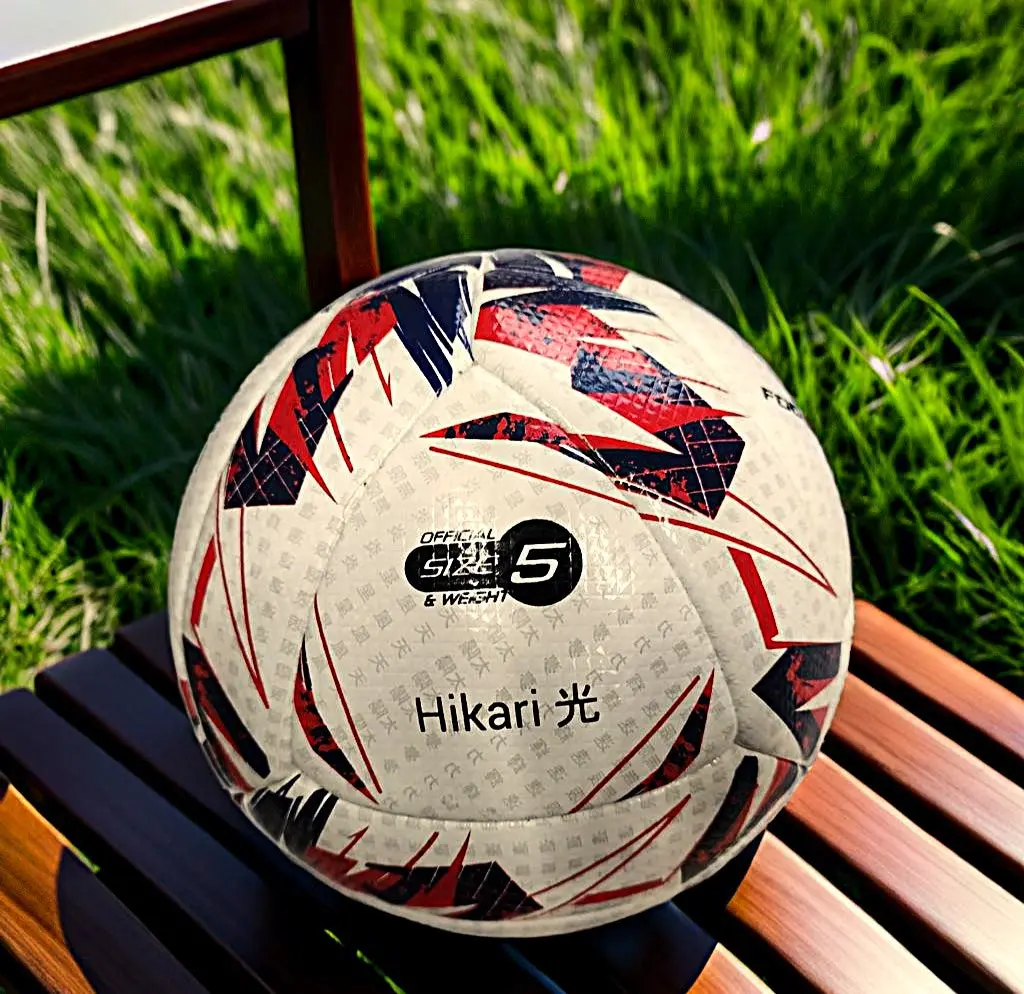
Save $10Hikari (光)Match ball

Hikari (光)

$65$75

Hikari is part of our premium soccer ball range, inspired by Japanese craftsmanship and designed for elite…
Save $30Climate FootballMatch ball

Climate Football

$110$140

CLIMATE Match Football: The Eco-Friendly Powerhouse Crafted from recycled PET bottles, the CLIMATE Football…

Get the next guide in your inbox

New articles, new balls and bundle deals. One email, no spam.